Best English Shayari Home

Category

Culture & Arts

19 articles

When the Form Breaks Open: How Shattering Shayari's Rules Became the Most Honest Way to Keep Them

When the Form Breaks Open: How Shattering Shayari's Rules Became the Most Honest Way to Keep Them

A new generation of English-language Shayars is deliberately fracturing the ghazal's ancient architecture—splintering couplets, chaining verses into narratives, abandoning the radif altogether—and calling it devotion rather than defiance. The question their work forces us to confront is not whether they are breaking the form, but whether the form was always meant to break this way. In the hands of the South Asian diaspora in America, Shayari's most radical act may be its own survival.

What You Must Forget Before You Can Truly Hear: The Listener's Initiation Into English Shayari

What You Must Forget Before You Can Truly Hear: The Listener's Initiation Into English Shayari

Western readers arrive at English Shayari carrying decades of learned expectation—that poems resolve, that endings arrive, that emotional closure is the destination. This piece examines the demanding psychological work of unlearning those assumptions, and why the suspension at the heart of Shayari's structure may be the most honest thing American literary culture has yet encountered.

Ancient Verses, Unexpected Rooms: How English-Language Shayari Is Finding a Home in America's Most Surprising Spaces

Ancient Verses, Unexpected Rooms: How English-Language Shayari Is Finding a Home in America's Most Surprising Spaces

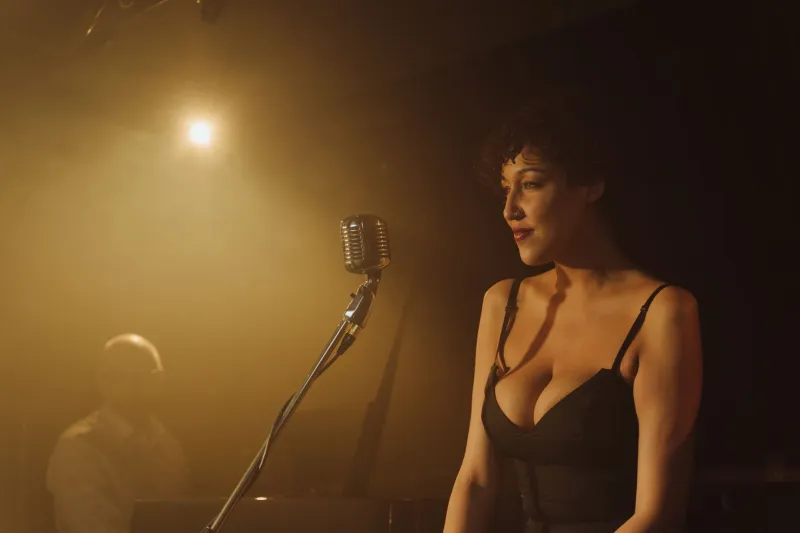
From the amber-lit jazz lounges of Brooklyn to the carefully curated shelves of independent bookstores in Austin, English-language Shayari is quietly colonizing spaces that have no historical obligation to welcome it—and thriving anyway. A new generation of poets and venue owners is discovering that the ghazal's emotional architecture translates with startling fluency across American cultural landscapes. What happens when a thousand-year-old form walks through a door it was never supposed to ope

Borrowed Bones: How Shayari's Architecture Is Quietly Dismantling the American Poetic Canon

Borrowed Bones: How Shayari's Architecture Is Quietly Dismantling the American Poetic Canon

A growing number of American poets trained in Western forms are turning to the structural logic of Shayari—its autonomous couplets, its radif, its emotional self-sufficiency—to escape the narrative obligations of confessional verse. What emerges at this intersection is neither imitation nor appropriation, but something closer to a quiet architectural revolution.

Lost in Translation, Found in Verse: How English Shayars Are Turning the Untranslatable Into Art

Lost in Translation, Found in Verse: How English Shayars Are Turning the Untranslatable Into Art

When classical Urdu ghazals meet the English language, something inevitably breaks — and something unexpected blooms in its place. Contemporary English-language shayars are discovering that the untranslatable is not a wall but a window, one that opens onto poetic possibilities the original form never anticipated. This is the story of what survives the crossing, and what magnificent things are built from what does not.

What the Silence Was Holding: How Shayari Unlocks the Unspoken Distance Between Immigrant Parents and Their American-Born Children

What the Silence Was Holding: How Shayari Unlocks the Unspoken Distance Between Immigrant Parents and Their American-Born Children

For many South Asian immigrant families in the United States, the deepest wounds are the ones that were never assigned language. English-language Shayari is emerging as an unexpected medium through which American-born children and their immigrant parents are finally finding words for what decades of displacement, sacrifice, and emotional restraint left unsaid. This piece examines how a single couplet can do what years of conversation could not.

Mourning Without a Map: How English-Language Shayari Gives Voice to America's Unnamed Losses

Mourning Without a Map: How English-Language Shayari Gives Voice to America's Unnamed Losses

American grief culture has long privileged losses that arrive with obituaries and funerals, leaving vast territories of human sorrow without language or ritual. English-language Shayari, with its centuries-old architecture of longing, is quietly filling that void—offering precise, devastating expression for estrangements, displacements, and disappearances that conventional mourning frameworks refuse to name. This is the story of why an ancient Urdu poetic form has become, for many Americans, the

When the Couplet Becomes the Couch: Shayari as a Healing Modality in South Asian American Mental Health

When the Couplet Becomes the Couch: Shayari as a Healing Modality in South Asian American Mental Health

Across therapy rooms in cities like Chicago, Houston, and New York, a quiet clinical revolution is unfolding—one measured not in diagnoses but in distilled verse. Mental health professionals working with South Asian American clients are finding that the formal architecture of Shayari offers something talk therapy alone often cannot: a container precise enough for grief that has no direct English translation. This is the story of how an ancient poetic form is entering the modern therapeutic canon

Between the Beat and the Beloved: How Shayari Is Reshaping American Music From the Inside Out

Between the Beat and the Beloved: How Shayari Is Reshaping American Music From the Inside Out

A new generation of American musicians is discovering that the ghazal's internal architecture—its repeating refrains, its ache, its formal precision—translates with startling fluency into hip-hop cadence and R&B atmosphere. Without announcing itself, Shayari is quietly becoming one of the most generative influences on streaming-era sound. The form's centuries-old emotional vocabulary has found an unexpected home in the playlists of listeners who may never have heard the word 'radif.'

Swiped Into Silence: How Gen Z Found Emotional Fluency in an Ancient Poetic Form

Swiped Into Silence: How Gen Z Found Emotional Fluency in an Ancient Poetic Form

When dating apps deliver infinite options but diminishing emotional returns, a growing number of young Americans are finding solace in the structured grief of Shayari. From TikTok couplets to late-night poetry threads, Gen Z is discovering that a centuries-old Urdu form speaks their romantic heartbreak more precisely than any algorithm ever could.

Stage Lights and Urdu Roots: How Shayari Is Quietly Revolutionizing America's Spoken Word Scene

Stage Lights and Urdu Roots: How Shayari Is Quietly Revolutionizing America's Spoken Word Scene

Across college campuses, independent venues, and major poetry festivals, a centuries-old Urdu verse tradition is finding a passionate new home in American spoken word culture. South Asian-American poets are weaving Shayari's intricate emotional architecture into the raw, confessional energy of the poetry slam — and audiences are listening. What began as a quiet cultural inheritance is becoming one of the most compelling creative conversations in contemporary American literary life.